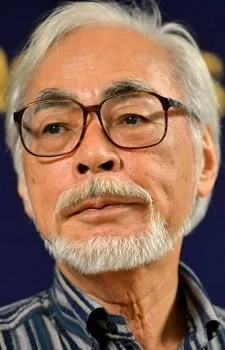
Hayao Miyazaki
Home People Hayao Miyazaki

Hayao Miyazaki

宮崎 駿 · b. Jan 5, 1941

An uncompromising animation director and fierce advocate for the hand-drawn line.

Known for

6 signature roles

Biography

Hayao Miyazaki is an anime director, animator, and co-founder of Studio Ghibli, and the scale of his critical and commercial success makes him arguably the most globally recognized figure in Japanese animation. His record spans six decades, and his influence extends beyond the medium into international film history.

Early Life and Entry into Animation

He was born on 5 January 1941 in Tokyo City, Empire of Japan. [4] His early life in the post-war environment, particularly his family's involvement in manufacturing parts for fighter planes at Miyazaki Airplane, is a biographical detail that frequently surfaces in analyses of his work, manifesting in his recurring motif of flight and aviation. [4]

His career began at the bottom of the animation pipeline. He joined Toei Animation in 1963, working initially as an in-between artist. His early verified credits include in-between animation on the 1965 film Gulliver's Travels Beyond the Moon and key animation on The Great Adventure of Horus, Prince of the Sun in 1968 and Animal Treasure Island in 1971. [4] Horus is particularly notable in the historical record as an early collaboration with Isao Takahata, establishing a professional relationship that would eventually alter the structure of the Japanese animation industry.

The 1970s Television Era

Following his tenure at Toei, Miyazaki moved through a succession of prominent studios during the 1970s, including A-Pro, Zuiyō Eizō, Nippon Animation, and Tokyo Movie Shinsha. [4] During his period at Nippon Animation in the late 1970s, he took on increasingly complex responsibilities. For Future Boy Conan in 1978, he is credited not merely as an episode director but with shaping the entire visual language of the series. The show operates as a foundational text for his later career, introducing themes of post-apocalyptic survival, environmentalism, and aviation that he would spend the next four decades refining. His work on Sherlock Hound in the early 1980s further demonstrated his capability to manage international co-productions, working alongside Italian studio RAI. These television credits are crucial because they demonstrate a director who learned to manage schedules and storyboards under the strict constraints of weekly broadcasts before moving entirely to the feature film model. His feature directorial debut came in 1979 with Lupin III: The Castle of Cagliostro, a film that established his capability to handle feature-length pacing and complex action set-pieces within an established franchise.

Foundation of Studio Ghibli

The pivot point of his career, and the most significant structural change in his record, arrived in the mid-1980s. Following the critical and financial success of his 1984 film Nausicaä of the Valley of the Wind, Miyazaki co-founded Studio Ghibli in 1985 alongside Isao Takahata and producer Toshio Suzuki. [4] Operating under their own studio allowed for a production model distinct from the standard television and OVA pipelines of the era, focusing almost exclusively on high-budget, theatrically released feature films.

Directorial Output and Feature Films

His directorial output under Studio Ghibli constitutes the core of his historical record. Laputa: Castle in the Sky followed in 1986, establishing the studio's early aesthetic. My Neighbor Totoro in 1988 introduced a creature so culturally pervasive that a newly discovered species of velvet worm was scientifically named Eoperipatus totoro in 2010. [4] He subsequently directed Kiki's Delivery Service in 1989 and Porco Rosso in 1992.

The late 1990s marked an escalation in the scale of his productions. Princess Mononoke, released in 1997, was the most expensive animated film ever produced at the time and became the first animated film to win the Japan Academy Film Prize for Picture of the Year. [4] This was followed by Spirited Away in 2001, which won the Academy Award for Best Animated Feature and held the record as the highest-grossing film in Japan for nearly two decades. [4] His subsequent films include Howl's Moving Castle in 2004, Ponyo in 2008, and The Wind Rises in 2013. [4]

Professional Philosophy

Miyazaki's professional philosophy is unusually well-documented. He is a fierce, outspoken advocate for traditional, hand-drawn animation, consistently opposing the industry's shift toward computer-generated imagery (CGI). He has characterized CGI as lacking depth, and his reaction to demonstrations of AI-generated animation has been actively hostile; he famously described a presentation of AI-generated art featuring deformed movements as ""an insult to life itself,"" noting its disrespect to disabled individuals. [3] This philosophical stance on the physical labor of drawing is central to understanding his production environment, where hand-drawn frames remain the primary currency of expression.

Retirements and The Boy and the Heron

His career record is also characterized by a highly publicized cycle of retirements and returns. The most formal of these occurred in 2013 following the release of The Wind Rises. At a press conference in Tokyo, he addressed the media directly: ""I know I've said I would retire many times in the past. Many of you must think, 'Once again.' But this time I am quite serious."" [2][3] Despite this explicit declaration, he returned to active production, culminating in the release of The Boy and the Heron in 2023. [1][4]

The production timeline for The Boy and the Heron is also an anomaly in modern anime. Spanning roughly seven years of active production, the film was allowed to proceed without a hard release deadline, a luxury almost unheard of in an industry characterized by rigid production committees and broadcast schedules. This extended gestation period was financed partly through streaming rights deals for the existing Studio Ghibli catalog, reflecting a strategic capitalization on his legacy to fund his final works. The resulting film, densely packed with self-referential imagery and mature reflections on legacy and grief, serves as a capstone to a record that began with in-between frames fifty years prior.

The release strategy for The Boy and the Heron is worth documenting as a reflection of his and Suzuki's accumulated industry leverage. The film was released in Japanese theaters with zero promotional trailers, no television spots, and only a single teaser poster. [1] Bypassing traditional marketing entirely is a risk profile that is effectively impossible for any other animation director to demand from a distribution committee, serving as primary evidence of his unique commercial standing.

His perspective on industry trends is rarely deferential. When questioned by producer Toshio Suzuki regarding the historic box-office dominance of the Demon Slayer franchise, Miyazaki's response was notably competitive: ""It sounds like the kind of thing that would be a hit. Well, to me it's a rival."" [1] This indicates an active engagement with the current market rather than a retreat into legacy status.

The Ghibli Museum and International Influence

Beyond his filmography, his architectural credits include the Ghibli Museum in Mitaka, Tokyo, which he designed. The Ghibli Museum merits specific attention because it functions as an archive of his specific approach to the medium. Visitors are presented with functioning zoetropes, panoramic dioramas, and actual production desks layered with watercolor storyboards and discarded pencil tests. By designing the space himself, Miyazaki codified his belief that the physical labor of animation—the thousands of discarded graphite sketches and paint pots—is as culturally significant as the finished celluloid. Modeled to resemble an ""untidy"" house filled with reference materials and drafting tools rather than a conventional theme park, it serves as a physical extension of his production philosophy. [4] His industry relationships also extend internationally, most notably a three-decade friendship with Pixar's John Lasseter, who acted as a primary advocate for localizing and distributing his films in Western markets. [1]

Two biographical notes for editors. The date of his 2013 retirement press conference is corroborated by multiple major news outlets as September 6, 2013, making it a firm chronological marker. [2][3] Furthermore, while his films often deal with environmental and pacifist themes, his public statements, including his 2024 acceptance of the Ramon Magsaysay Award where he discussed Japan's wartime conduct, indicate a political engagement that aligns seamlessly with his cinematic texts. [1]

He remains the most heavily documented figure in Japanese animation, yet his primary distinguishing feature remains technical: an unwavering commitment to the hand-drawn line.

I know I've said I would retire many times in the past. Many of you must think, 'Once again.' But this time I am quite serious.
— The Japan Times

Filmography

163 credits shown
Sort
2023 Production
2023
Original Creator
The Boy and the Heron
Production
2023 Production
2023 Production
2020 Production
2018 Production
2018
Original Creator
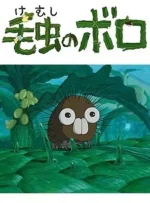
Boro the Caterpillar
Production
2018 Production
2014
Original Character Design
Japan Anima(tor)'s Exhibition
Production
2013
Director
The Wind Rises
Production
2013
Original Creator
The Wind Rises
Production
2013
Screenplay
The Wind Rises
Production
2011 Production
2011
Planning
Treasure Hunting
Production
2011 Production
2010 Production
2010 Production
2010 Production
2010 Production
2010 Production
2010 Production
2010 Production
2010 Production
2010 Production
2009
Planning
Yomiuri Shimbun
Production
2008
Animation Director
Ponyo
Production
2008
Director
Ponyo
Production
2008
Executive Producer
Ponyo
Production
2008
Screenplay
Ponyo
Production
2008
Script
Ponyo
Production
2006 Production
2006 Production
2006
Director
House Hunting
Production
2006
Key Animation
House Hunting
Production
2006 Production
2006 Production
2006 Production
2006
Script
House Hunting
Production
2006
Storyboard
House Hunting
Production
2005 Production
2004 Production
2004
Executive Producer
Howl's Moving Castle
Production
2004 Production
2004 Production
2002 Production
2002 Production
2002
Executive Producer
The Cat Returns
Production
2002 Production
2001 Production
2001
Director
The Whale Hunt
Production
2001
Director
Spirited Away
Production
2001
Original Creator
Spirited Away
Production
2001
Screenplay
Koro's Big Day Out
Production
2001
Screenplay
The Whale Hunt
Production
2001
Script
Spirited Away
Production
2001
Storyboard
The Whale Hunt
Production
2001
Storyboard
Spirited Away
Production
1997 Production
1997 Production
1997
Screenplay
Princess Mononoke
Production
1997
Theme Song Lyrics
Princess Mononoke
Production
1995 Production
1995
Director
On Your Mark
Production
1995 Production
1995 Production
1995
Screenplay
On Your Mark
Production
1995 Production
1994
Executive Producer
Pom Poko
Production
1994
Planning
Pom Poko
Production
1992
Director
Nandarou
Production
1992
Director
Porco Rosso
Production
1992 Production
1992
Editing
Porco Rosso
Production
1992
Key Animation
Nandarou
Production
1992
Original Creator
Porco Rosso
Production
1992
Screenplay
Porco Rosso
Production
1992 Production
1992
Storyboard
Porco Rosso
Production
1992 Production
1991
Executive Producer
Only Yesterday
Production
1989 Production
1989 Production
1989 Production
1988 Production
1988
Original Creator
My Neighbor Totoro
Production
1988 Production
1988
Storyboard
My Neighbor Totoro
Production
1986
Character Design
Castle in the Sky
Production
1986 Production
1986
Screenplay
Castle in the Sky
Production
1986
Theme Song Lyrics
Castle in the Sky
Production
1984 Production
1984 Production
1984 Production
1984
Director
Sherlock Hound
Production
1984
Episode Director
Sherlock Hound
Production
1984 Production
1984 Production
1984 Production
1984 Production
1984
Storyboard
Sherlock Hound
Production
1982 Production
1980 Production
1979 Production
1979 Production
1979 Production
1979 Production
1979 Production
1979 Production
1978
Character Design
Future Boy Conan
Production
1978
Director
Future Boy Conan
Production
1978
Episode Director
Future Boy Conan
Production
1978
Key Animation
Future Boy Conan
Production
1978
Mechanical Design
Future Boy Conan
Production
1978 Production
1978
Storyboard
Future Boy Conan
Production
1977 Production
1977
Episode Director
Lupin III: Part II
Production
1977
Key Animation
Raccoon Rascal
Production
1977
Screenplay
Lupin III: Part II
Production
1977
Storyboard
Lupin III: Part II
Production
1976 Production
1975
Key Animation
A Dog of Flanders
Production
1974
Key Animation
Heidi: Girl of the Alps
Production
1974 Production
1974 Production
1973
Key Animation
Kouya no Shounen Isamu
Production
1973
Key Animation
Samurai Giants
Production
1973
Original Character Design
Jungle Kurobee
Production
1973 Production
1972
Key Animation
Panda! Go Panda!
Production
1972
Original Character Design
Panda! Go Panda!
Production
1972
Screenplay
Panda! Go Panda!
Production
1972
Storyboard
Akadou Suzunosuke
Production
1971
Episode Director
Lupin III
Production
1971 Production
1971
Key Animation
Animal Treasure Island
Production
1971
Key Animation
Lupin III
Production
1971
Key Animation
Sarutobi Ecchan
Production
1969
Key Animation
Secrets of Akko-chan
Production
1969
Key Animation
Muumin
Production
1969 Production
1969
Key Animation
Flying Phantom Ship
Production
1969 Production
1968
Key Animation
Horus: Prince of the Sun
Production
1968 Production
1967
Key Animation
Sally the Witch
Production
1966
Key Animation
Rainbow Sentai Robin
Production
1965
In-Between Animation
Gulliver no Uchuu Ryokou
Production
1965
Key Animation
Hustle Punch
Production
1965 Production
1964
Key Animation
Samurai Kid
Production
1963
In-Between Animation
Ookami Shounen Ken
Production
1963
In-Between Animation
Wanwan Chuushingura
Production
Production
Production
Production
Production
Production
Production

Awards & honors

Recognized by peers and fans alike.

7 wins · 0 nominations · 1 organization

Tokyo Anime Award Festival

Established in 2002 and launched as an independent event in 2014, the Tokyo Anime Award Festival (TAAF) is an annual international animation festival hosted in Tokyo, Japan. Operating under the slogan "TOKYO is the HUB of contemporary ANIMATION," its goal is to discover new talent, promote animation culture, and celebrate outstanding works worldwide.
7 wins
2014
13th edition
Won
Best Screenplay / Original Story
2009
8th edition
Won
Best Director
For Ponyo Ponyo Ponyo
2009
8th edition
Won
Best Original Story
For Ponyo Ponyo Ponyo
2005
4th edition
Won
Best Director
For Howl's Moving Castle Howl's Moving Castle Howl's Moving Castle
2002
1st edition
Won
Best Director
For Film category
2002
1st edition
Won
Best Screenplay
For Film category
2002
1st edition
Won
Best Character Designer
For Film category

References

Sources for the summary and biography text on this page, in APA style.

  1. ^Anime News Network. (2024). Hayao Miyazaki. Anime News Network. Retrieved September 10, 2026.
  2. ^The Guardian. (2013). Hayao Miyazaki: 'My era of animation is over'. The Guardian. Retrieved September 10, 2026.
  3. ^The Japan Times. (2013). 'I'm quite serious' about retiring, Miyazaki says. The Japan Times. Retrieved September 10, 2026.
  4. ^Wikipedia contributors. (2026). Hayao Miyazaki. Wikipedia. Retrieved September 10, 2026.